When Remote Online Notarization Makes Sense
Learn when remote online notarization, a mobile visit, or an in-person appointment is the best fit for your Orlando document signing needs today.
When to Choose an In-Home Notary Orlando
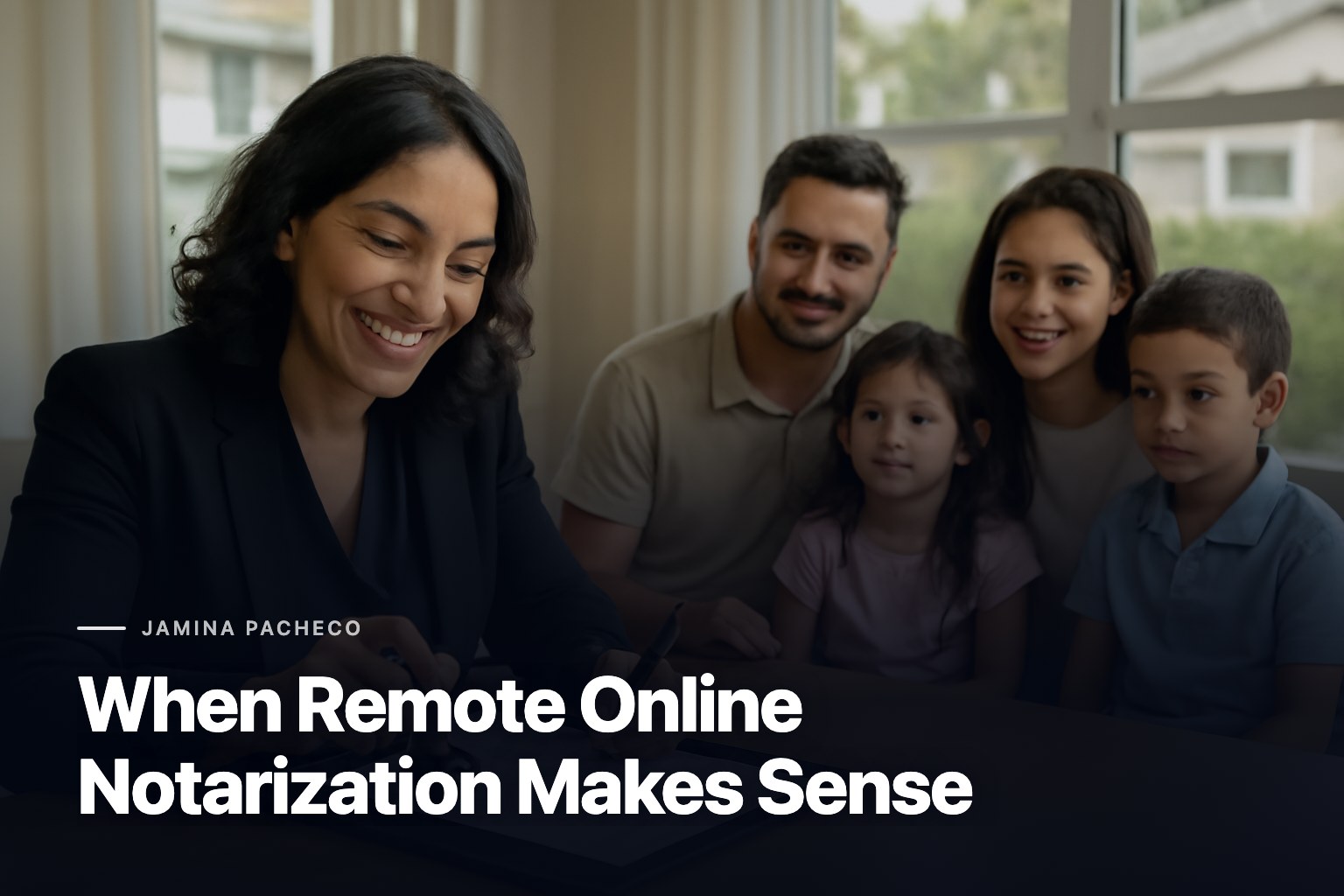
A mobile visit makes sense when getting around costs more time and effort than handling the notarization wherever the person already is. That could be a home, an office, a rehabilitation center, a senior living facility, a hospital, or even a business location where several people need to sign during the same time window.
The typical case is very human: someone needs to sign today, but cannot rearrange work, transportation, childcare, or mobility to cross the city. In those situations, an in-home notary Orlando cuts down on friction without changing the essential requirement of the notarization: that the signature be completed by the right person, with valid ID, at the right time.
It also makes sense when the document requires coordination between multiple parties. If the signers are not at the same address or if everyone’s schedule is difficult to align, a mobile visit can keep a small delay from turning into a lost week.
Signs That a Mobile Visit Is the Best Choice
There are pretty clear clues. If you are thinking about leaving home just for a quick signature, if the signer does not drive, if there is a medical recovery involved, or if the appointment has to happen outside business hours, a mobile visit is usually more efficient than trying to move everyone else around.
It is also worth looking at the setting. A mortgage closing, a loan signing, or an authorization with several pages is often handled better when the notary can review the package calmly, without unnecessary interruptions and with enough time to verify details and complete the act in an orderly way.
Specific Situations Where a Mobile Visit Prevents Delays
Not all documents carry the same urgency or require the same level of coordination. Even so, there are scenarios where an in-home mobile service fits especially well.
- Powers of attorney: when someone needs to authorize another person to act on their behalf and prefers to sign from home or from their room.
- Mortgage closings and loan signings: when the closing package requires several signatures and the day’s logistics are already tight.
- Quitclaim Deed: when transferring an interest in real estate needs to be signed carefully and without rushing between offices.
- Affidavits and oaths: when the person wants to avoid traveling for a brief but important matter.
- Minor travel consent forms: when parents or guardians need to coordinate signing around complicated family schedules.
If your case does not fit that list exactly, that does not mean a mobile visit will not help. It means it is worth checking whether the document requires physical presence, what kind of notarization it allows, and whether an alternative like Remote Online Notarization (RON) could handle it faster.
When You Do Not Need a Mobile Visit
Sometimes the urge to book an in-home notary Orlando comes more from urgency than from actual need. If you can get to an in-person appointment without trouble, if there is only one simple signature, and if all signers are available, you may not need to pay for the added convenience of a mobile visit.
There are also matters that are better handled by video call. When the signer is outside the area, has a document that qualifies for remote notarization, and has compatible identification, the RON option may be more practical than arranging a visit. The Remote Online Notarization (RON) Service exists precisely for those situations where physical presence adds no real advantage.
The right choice usually comes down to three questions: where the person is, how much time there is, and what the document requires. If any of those answers changes, the best notarization format changes too.

What to Check Before Scheduling the Appointment
The part that prevents the most problems is not the signature itself, but the preparation. Before booking a mobile visit, it is smart to have the full document on hand, check that no pages are missing, and confirm who needs to sign and who only needs to show identification.
Valid ID deserves special attention. The notary cannot guess with questionable documents or assume that a photo or copy is enough. If you are unsure about which ID is accepted, it is best to sort that out before the trip so a visit does not turn into another appointment.
It also helps to confirm whether the document requires witnesses. In some cases the notary does not provide witnesses, and in others the setup changes depending on the type of document. If signers use different names, hyphenated surnames, or different versions of their signature, it is best to make everything consistent before sitting down at the table.
Mistakes That Needlessly Stretch Out a Visit
The most common one is showing up with an incomplete document or with pages that are not supposed to be signed. Another frequent mistake is assuming the file is “ready” without checking for blank spaces, wrong dates, or misspelled names.
It also causes major delays not to confirm that all signers are available. If one person is missing or someone thinks they can sign “later,” the notarization may not move forward as expected. A mobile visit works best when the logistics are already locked in, not when they still depend on last-minute calls.
To better understand the general standard for notarization in Florida, it may be helpful to review the official State of Florida notary information and compare it with the type of matter you have in hand. The practical rule is simple: if the document and the ID are properly prepared, the appointment usually goes smoothly.
Differences Between In-Person, Mobile, and remote online notarization
An in-person appointment is still the best option when you live nearby, have no mobility restrictions, and prefer to handle the matter at an office. It is straightforward, usually quick, and avoids coordinating extra travel.
A mobile visit, on the other hand, pays off when the location matters. It could be a home, a hospital, an office with multiple participants, or a situation where the travel time is more valuable than the convenience of going to a notary office. In Orlando, that difference matters more than it seems, especially when the day’s schedule is already full.
Remote online notarization comes into play when the document allows that format and the person can verify identity and sign by video call. If you are having a hectic day or are outside the area, you may not need a physical trip either way.
How to Choose Without Overcomplicating It
Think of it this way: if the document requires physical presence and you do not want to move anyone, the mobile visit wins. If the document allows remote signing and the person is far away or needs it handled right away, RON may be the best way out. If the trip is short and everyone can make it, an in-person appointment is usually enough.
There is no need to turn this into a complicated technical decision. The useful question is which option lowers the risk of delay, rejection, or unnecessary back-and-forth the most. Choosing well from the start is worth more than “trying” the format that sounds most convenient.
Documents That Usually Benefit from Mobile Service
Some matters are about more than the signature itself; the context matters too. A power of attorney, for example, may require a calm setting to review names, powers, and signatures without rushing. A mortgage closing usually calls for focus, time, and an orderly packet of pages.
Documents tied to housing and family also benefit from a controlled environment. A minor travel consent form, an affidavit, or a Quitclaim Deed is handled better when everyone involved is in the same place and the notary can complete the act without interruptions.
In Orlando, many people juggle work, school, and long commutes. That is where an in-home mobile service keeps a simple task from eating up half the day. Jamina Pacheco offers service in Spanish and English, and that makes a real difference when every instruction needs to be understood without wasting time on improvised translation.
Cases Where Peace of Mind Matters More Than Speed
Not every document should be handled in a hurry. Some signatures call for calm because they affect housing, legal authority, or minors’ travel. In those cases, the setting where the signing happens matters just as much as the speed.
If there are relatives of different ages, older adults, restricted schedules, or a medical appointment in the mix, a mobile visit reduces the strain. And if the signer wants to avoid a waiting room or unnecessary travel, in-home service makes sense from a purely logistical standpoint.
To review service options and see which one fits your situation best, you can visit the Services page or learn more about Jamina Pacheco before booking.
How to Prepare for a Mobile Appointment Without Wasting Time
The best experience usually starts before the notary arrives. Having the document printed, checking the number of signers, and setting aside valid IDs saves time and avoids misunderstandings. If there are several pages, it helps to know in advance which ones must be signed and which ones are only for review.
It also helps to choose a place with a sturdy table, good lighting, and little noise. It may seem like a small detail, but it makes reviewing names, dates, and signatures much easier. When the notarization happens at home or in a medical setting, a little preparation makes the visit more orderly and respectful of everyone’s time.
If you handle documents often, it is worth bookmarking useful pages like the blog and the FAQ. Not because everything needs to be read before signing, but because having the information at hand keeps you from relying on guesswork.
One Detail Many People Overlook
Timing matters too. A visit during business hours may require coordination with reception staff, supervisors, or security personnel; a visit at home may require all signers to be present at the same time and free from interruptions. If the document involves several people, the appointment should be scheduled based on real availability, not hoped-for availability.
For those who value extra information about communication and digital presence, nikamediaus.com can be a useful resource if you want to compare how different brands organize their service information. Even so, when it comes to a notarized signature, what matters most is clarity, punctuality, and following the procedure.
Frequently Asked Questions
Does an in-home notary Orlando work for any document?
Not necessarily. It depends on the type of document, where it will be signed, and whether Florida law allows that form of notarization for that case. The right move is to verify the matter before booking.
What is better: a mobile visit or remote online notarization?
It depends on the situation. If the person is on site and prefers in-person service, a mobile visit may be better. If the document allows RON and the person cannot travel or is far away, signing by video call may solve it faster.
Can I book mobile service for a mortgage closing?
Yes, many closings and loan signings are handled with mobile service when the package requires coordination and signatures at a specific location. The important thing is to confirm the closing details in advance.
Do I need to bring anything besides my ID?
Usually, yes: it is wise to bring the full document, check whether a witness is needed, and confirm that no pages or details are missing. Valid ID is essential, but it is usually not the only thing required.
What areas does Jamina Pacheco serve?
They serve Orlando and Central Florida, with in-person, mobile, and online options. If your case requires travel, it is best to coordinate the exact location when booking.
If you already know that a mobile visit saves you time, avoids travel, or fits your document better, you can book an appointment and share the details of the matter from the start. That way, the right option for your signature is confirmed and the service is arranged without unnecessary back-and-forth.
If you would rather talk before booking, you can also review Jamina Pacheco’s website and choose the channel that is most convenient for you. When a document depends on getting a signature right, the best decision is usually the one that reduces friction from the very first step.
Was this useful?
If you need help with this in Orlando, I'm glad to take care of it.