Understanding remote online notarization in Florida
Understand remote online notarization in Florida, including document eligibility, identity checks, signing steps, and common issues for Orlando clients.
How remote online notarization in Florida works step by step
The session starts before the video call. First, the document is reviewed to confirm that the type of transaction allows this format, that the person’s name matches their ID, and that there are no missing pages, dates, or blank spaces that could create doubts. That upfront check avoids the most awkward problem: realizing, once everyone is already connected, that the document isn’t ready.
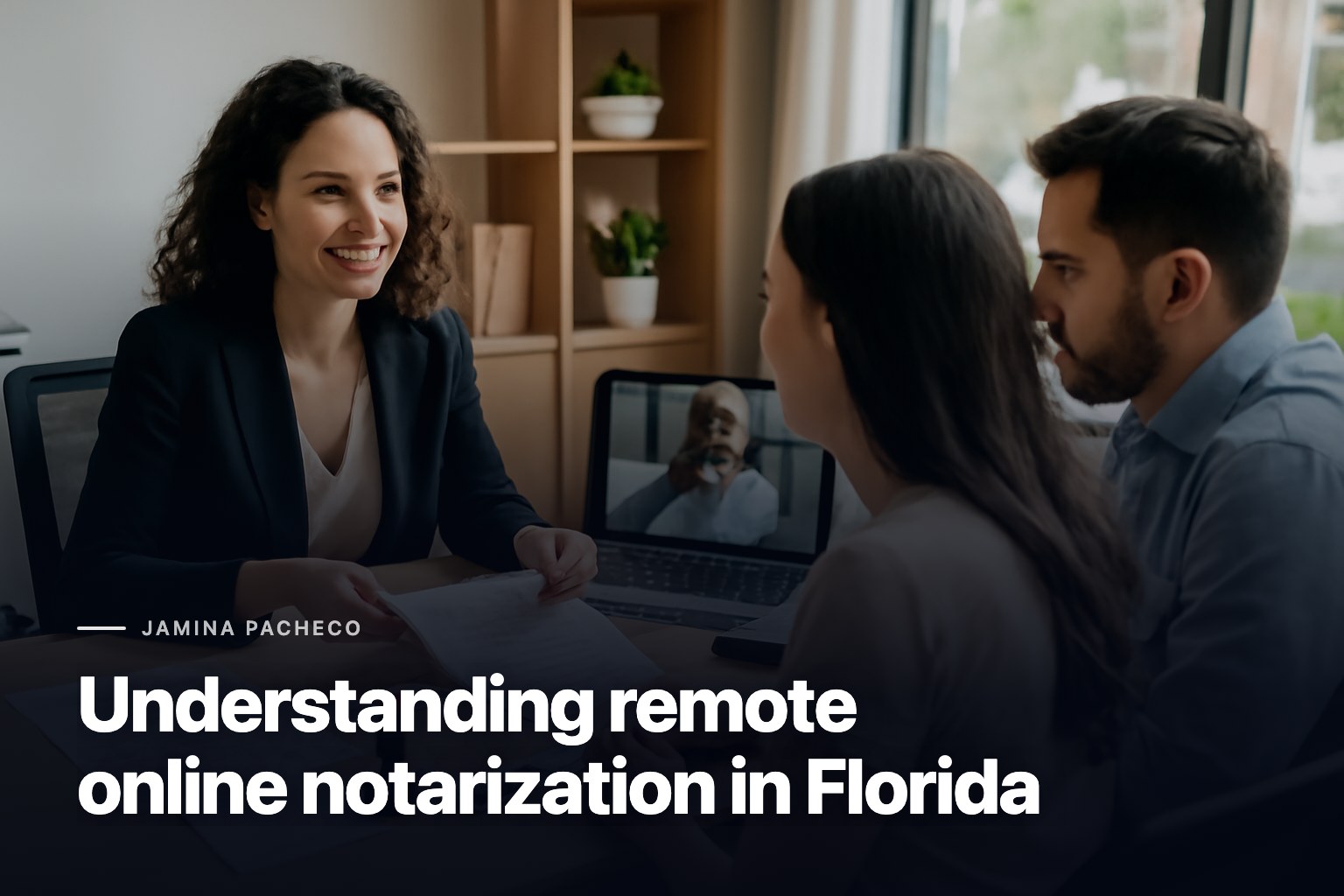
Then comes identity verification. In Florida, the notary can use state-approved identification methods, which usually include valid credentials, knowledge-based authentication through security questions, or both depending on the case. The process happens by video, but it is not casual or improvised: the notary must be able to see, hear, and record the interaction clearly in order to certify that the signature was completed properly. The Florida Department of State keeps official information on the state’s notarial requirements, and it’s worth reviewing when the document is sensitive or will be used outside Florida.
Next comes the signing. Depending on the document, the person signs electronically or in the manner required by the platform used for the session. The notary witnesses the signing live, applies the seal, and creates the record that accompanies the session. If the document needs witnesses, they must also take part in a way that complies with the procedure, because an omission at that point can make the transaction unusable.
The final step is usually the one clients appreciate most: receiving the signed and notarized file without leaving home, the office, or wherever they happen to be. If the document is going abroad, it may need an apostille afterward. If the destination is another state or a specific entity, it’s also wise to verify whether they accept remote notarization and in what format.
What documents are usually compatible and which ones need case-by-case review
Remote online notarization in Florida is often used for powers of attorney, affidavits, certain consents, travel authorizations, and other documents where physical presence offers no real advantage. It can also be useful for loan signings and mortgage closings, as long as the lender, title company, or closing package accepts this method. Not every closing works the same way, so a prior review helps avoid issues with title or the company coordinating the transaction.
On the other hand, some documents require extra care. A quitclaim deed, for example, is not just about whether the wording is correct; it also matters how it is signed, who appears, whether witnesses are needed, and whether the receiving office accepts remote notarization in that specific situation. The same goes for documents that will later travel abroad or for forms that depend on a formal chain of steps. If the document needs an apostille, the order matters.
A simple rule helps a lot: if the transaction has financial, family, or real estate consequences, don’t just assume it can be done online. Review the document, confirm the final destination, and decide whether a remote signature fits. When the situation calls for a different setup, a mobile notary service at home may be safer or more convenient than insisting on a video call that won’t solve everything.
For people preparing a loan signing, a closing, or a power of attorney, it’s also important to keep in mind the type of institution that will receive the document. Policies change, and when the recipient is strict, a flawless notarization may still not be enough if initials, a witness, or an additional certification are missing. That’s why the process should not be improvised on the phone; it should be checked beforehand.
Technical and identity requirements that often derail a session
The technical side seems minor until it fails. An unstable connection, a camera that doesn’t focus properly, choppy audio, or a file that won’t open all waste time right when moving forward matters most. A remote session needs a smooth video call, a compatible device, and enough battery or power to keep the whole session running without interruptions.
Identification also matters. The ID must be current and in good condition, with readable information. If the legal name has variations, hyphenated surnames, name changes after marriage, or differences between documents, that should be reviewed beforehand. A misspelled name on a power of attorney, for example, can delay a banking matter or cause the recipient to request a correction.
Warning signs before you begin
- The document has blank spaces where someone could add information later.
- The ID is expired, damaged, or does not match the name on the document.
- A witness required by the type of document or by the final recipient is missing.
- The person signing is not ready to answer verification questions.
- The file is incomplete or has missing pages.
If any of those warning signs show up, the wise move is to pause. The process works well when everything is organized; if not, the problem is not the technology, but the document. And fixing it before signing is always better than trying to repair it afterward.
In some cases, the signer also needs to create a digital identity or complete an additional verification step depending on the platform used by the notary. To understand how authentication and electronic signing fit together, it may help to review the guidance from the IAM-EVA identity and signature product, especially when the client wants to know why the video call is not just “another video call.”

When to choose RON and when another notarial service makes more sense
RON is ideal when the person is far away, has limited mobility, faces a real emergency, or needs to handle a signature without traveling. It also helps when several people need to coordinate from different locations and the document accepts that format. For families, property owners, and busy people, it can save time and logistical headaches.
But it is not always the best option. If the document requires physical presence, if the other party does not accept a remote signature, or if the signer needs in-person help to review the signing order, a mobile notary service at home is usually more appropriate. The same applies when there are sensitive documents that call for a calmer conversation, on-site witnesses, or coordination that the screen makes more complicated than helpful.
In Orlando, that practical judgment makes all the difference. Some clients come in thinking everything can be handled online and then discover that the recipient wants a traditional signature; others think they need to travel even though they could do it by video call. An experienced notary can help choose the right option from the start. In the case of Jamina Pacheco, service in Spanish and English makes that initial decision easier, and that often matters more than the notarial act itself.
Common mistakes that make a correct signature useless
One of the most common mistakes is signing too early. In a remote session, the signature must happen while the notary is present and can attest to the signer’s appearance. If someone signs on their own before the video call, the act loses value and may have to be redone from scratch.
Another common misstep is assuming that a notarized signature solves every later step. Not always. If the document needs an apostille to leave Florida, that step must come after notarization. And if the wording is not accepted by the receiving institution, the problem is not the lack of a seal, but the suitability of the transaction.
Simple things can also become costly: names that do not match, missing dates, absent initials, attachments separated from the main body, or witnesses who do not show up at the agreed time. In documents such as powers of attorney, travel authorizations for minors, or affidavits, those details are what end up blocking a filing, an enrollment, a banking request, or a personal matter.
How to avoid unnecessary rescheduling
- Review the entire document before the session.
- Have a valid, readable ID ready.
- Confirm whether witnesses are needed.
- Check that the final recipient accepts remote notarization.
- Ask whether an apostille or any additional step will be required.
Anyone who works with notary services every day can spot these issues in minutes. That’s why, when the matter is important, it pays to do a prior review instead of discovering the problem when everyone is already connected by video call. This service does not eliminate judgment; it requires it.
How RON combines with apostilles, powers of attorney, and closings
Some documents are not finished when they are signed. A power of attorney may need to be used in another jurisdiction; an authorization may require an apostille; a mortgage closing may come with its own instruction package; a quitclaim deed may need to pass through several hands before being recorded. That’s why it helps to think about the full path, not just the moment of signing.
If the document is going outside the United States, it is often useful to first check whether it needs an apostille and then decide on the notarization method. If the destination is another country, getting the order right can prevent rejections. For people handling international documents from Orlando, this coordination is especially important when time is tight and there is no room to repeat the process.
In power of attorney situations, RON can be a practical option if the signer meets the requirements and the document is properly prepared for its intended use. For those who want a clearer understanding of this type of transaction, the power of attorney service helps show when a remote signature is viable and when another method makes more sense.
The same applies to mortgage closings and loan signings. Coordination among the parties, title, lenders, and the notary requires precision. If a signature happens too soon, if an initial is missing, or if the packet arrives incomplete, the closing gets delayed. And in real estate, a delay is never just a minor detail: it can affect moves, financing, or the agreed closing date with the other party.
Frequently asked questions about remote online notarization in Florida
Do I need to be in Florida to use this service?
Not necessarily. Remote online notarization in Florida may allow the signer to complete the process from outside the state, as long as the document, the identity, and the circumstances of the transaction meet the applicable requirements. What matters is confirming that the session will be valid for the way the document will be used.
Is it good for any document?
No. Some documents do allow this format, while others require physical presence, specific witnesses, or additional review. Before booking, it is best to verify whether the final recipient accepts the document signed by video call and whether the file is fully prepared.
What if my ID does not exactly match the name on the document?
That issue should be reviewed before the session. Small differences can cause problems when the document is presented to a bank, a court, a foreign authority, or a recording office. If there are variations due to marriage, abbreviations, or hyphenated surnames, it is best to clarify them in advance.
Can I use RON for a power of attorney or a travel authorization for a minor?
Often yes, but it depends on the specific document and the final destination. In family matters, such as travel permissions for minors, the prior review is especially important because an error in names, dates, or signatures can make the document practically useless.
After I notarize online, do I still need an apostille?
If the document will be used in another country and that country requires one, yes. Remote online notarization in Florida does not replace an apostille when one is needed. They are separate steps, and getting the order right avoids later rejections.
What should I do if the document requires witnesses?
That has to be confirmed before the session. Some transactions work with witnesses present in the process; others are not compatible with the remote format. If the document needs them, it is better to coordinate everyone ahead of time so the signing is not interrupted.
If you are in Orlando or anywhere in Central Florida and want to handle a signature without improvising, you can book an appointment with Jamina Pacheco to review your document before the session and choose the right format. When the matter is sensitive, a quick review today keeps you from fixing tomorrow what should have been ready already.
Was this useful?
If you need help with this in Orlando, I'm glad to take care of it.